Search “relationship goals” and you’ll find matching outfits, surprise trips, and couples who never seem to have a bad day. Those images are fun, and they’re a highlight reel. Real relationship goals are less photogenic and far more useful.
Healthy relationship goals describe how you want to treat each other. Here are eight worth setting.
1. Support each other’s growth
Research on the Michelangelo phenomenon found that when partners affirmed each other’s ideal selves, people moved closer to those ideals, and their relationships tended to function better and last longer (Drigotas et al., 1999). Goal: know one thing your partner is working toward this year, and ask about it regularly.
2. Make appreciation a habit
In a study pooling data from 43 couples studies, appreciation was one of the five strongest predictors of relationship quality (Joel et al., 2020). Goal: say one specific thank-you every day.
3. Show commitment through action
Believing your partner is committed was the strongest predictor in the same study (Joel et al., 2020). Goal: keep your promises, and talk about your shared future in concrete terms.
4. Handle conflict with respect
Goal: no name-calling, no contempt, and a repair within a day after any argument.
5. Protect regular time together
Goal: one standing weekly block of time that stays on the calendar, even in busy seasons.
6. Keep your individual lives healthy
Goal: each of you keeps at least one friendship or interest of your own, with the other’s encouragement.
7. Get on the same page about money
Goal: a monthly money conversation where you review spending and savings together, without blame.
8. Keep learning each other
Goal: once a month, ask each other a question you’ve never asked before.
How to set relationship goals that stick
•Choose one or two goals at a time instead of all eight.
•Make each goal specific enough that you’d both know whether it happened.
•Agree on why the goal matters to each of you.
•Review progress monthly, briefly and kindly.
A monthly check-in you can use
•What felt good between us this month?
•Which goal did we keep, and which one slipped?
•What’s one small adjustment for next month?
Safety note: If you feel afraid of your partner, or the relationship includes threats, control, monitoring, or violence, general relationship advice isn’t the right starting point. Contact a domestic violence resource or a qualified professional. |
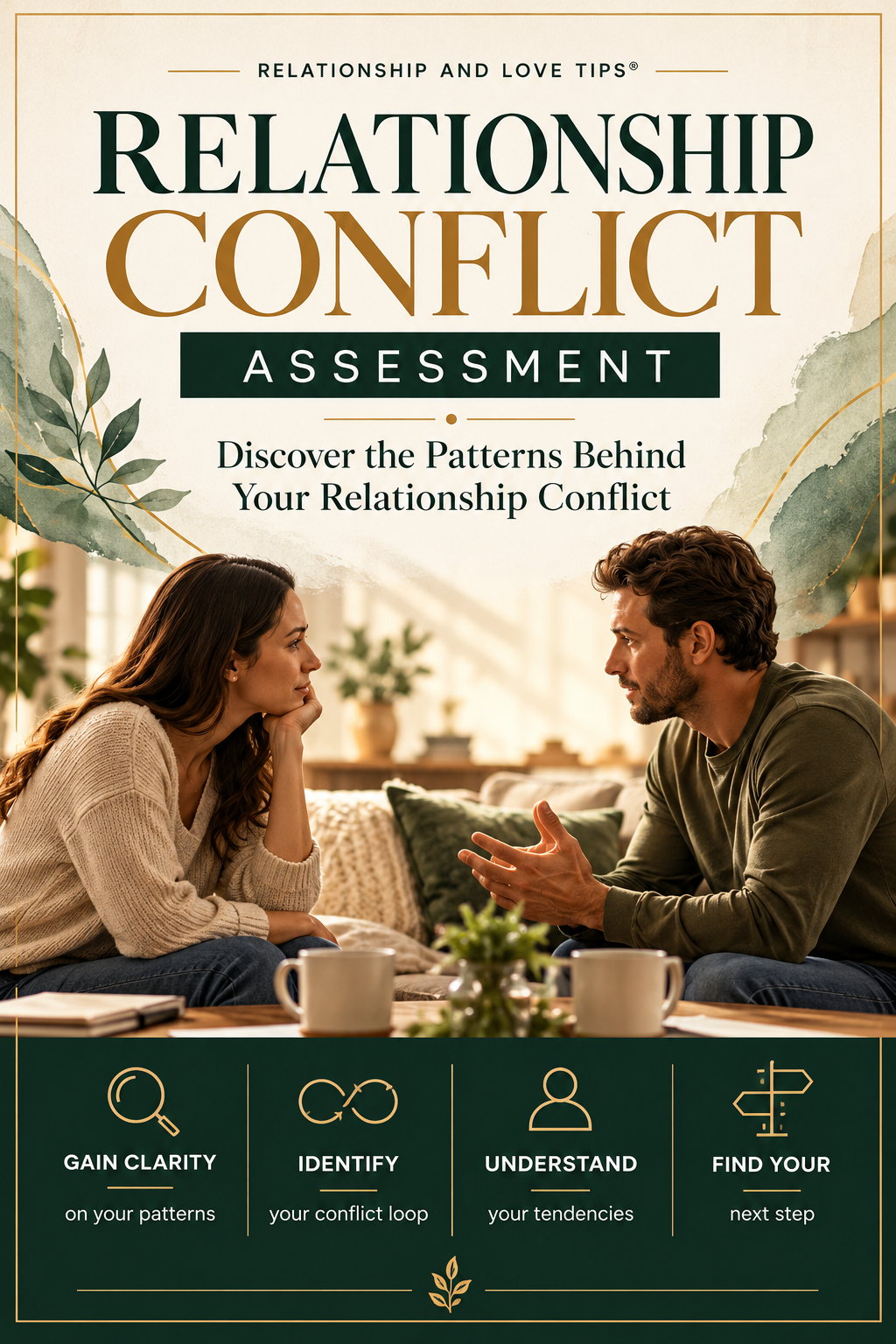
If handling conflict with respect is the goal that keeps slipping, it deserves focused attention. Break the Fight Cycle™ is a private, self-paced online program. In the Starter Series (Modules 1–3), you’ll learn to: ✓Map how a real argument escalated, from the first spark to the aftermath, using The Escalation Circuit™. ✓Recognize your own escalation style among seven common patterns (The 7 Escalation Styles™), without labeling or diagnosing anyone. ✓Practice C.A.L.M.™ and choose a deliberate response to replace your automatic reaction. No workshops, no group sessions, and no explaining your relationship to strangers. Start Breaking the Fight Cycle → www.relationshiplovetips.com/btfc-launch Practical relationship education for recurring conflict patterns. Not therapy, crisis care, or a substitute for professional support. |
Follow us:TikTok | YouTube| Instagram | Facebook
Frequently Asked Questions
What are healthy relationship goals?
Healthy relationship goals describe how you treat each other, such as supporting each other’s growth, showing appreciation, handling conflict respectfully, and protecting time together.
How do couples set relationship goals?
Pick one or two specific goals, agree on why they matter, and check progress monthly in a short, kind conversation.
Are social media “couple goals” realistic?
They show highlights of daily life. Goals based on how you treat each other are more useful than goals based on how a relationship looks.
References
Drigotas, S. M., Rusbult, C. E., Wieselquist, J., & Whitton, S. W. (1999). Close partner as sculptor of the ideal self: Behavioral affirmation and the Michelangelo phenomenon. Journal of Personality and Social Psychology, 77(2), 293–323. https://doi.org/10.1037/0022-3514.77.2.293
Joel, S., Eastwick, P. W., Allison, C. J., Arriaga, X. B., Baker, Z. G., Bar-Kalifa, E., Bergeron, S., Birnbaum, G. E., Brock, R. L., Brumbaugh, C. C., Carmichael, C. L., Chen, S., Clarke, J., Cobb, R. J., Coolsen, M. K., Davis, J., de Jong, D. C., Debrot, A., DeHaas, E. C., . . . Wolf, S. (2020). Machine learning uncovers the most robust self-report predictors of relationship quality across 43 longitudinal couples studies. Proceedings of the National Academy of Sciences, 117(32), 19061–19071. https://doi.org/10.1073/pnas.1917036117
Related Articles
•10 Ways to Strengthen a Relationship, Backed by Research
•What Does a Healthy Relationship Look Like? 10 Signs You’re on Solid Ground
•Relationship Advice From Experts: What Research Says Actually Matters
•Marriage Feels Like Roommates? Why It Happens and How to Reconnect
•Start the Break the Fight Cycle™ Starter Series