Private
Reflect without sharing the details of your relationship with a group or other participants.
Free Relationship Conflict Assessment
Recognize the relationship conflict patterns that may keep recurring—even when the argument starts with a different topic.
Take the free Relationship Conflict Assessment to reflect on what tends to happen when tension rises, how you respond under pressure, and where the familiar cycle may begin to take over.
A private first step into Break the Fight Cycle™ relationship education.
Does this feel familiar?
Money. Chores. Parenting. Intimacy. Family. Plans. A text message. A tone of voice.
The subject changes, but the way the conversation unfolds can begin to feel strangely familiar.
“How did we end up here again?”
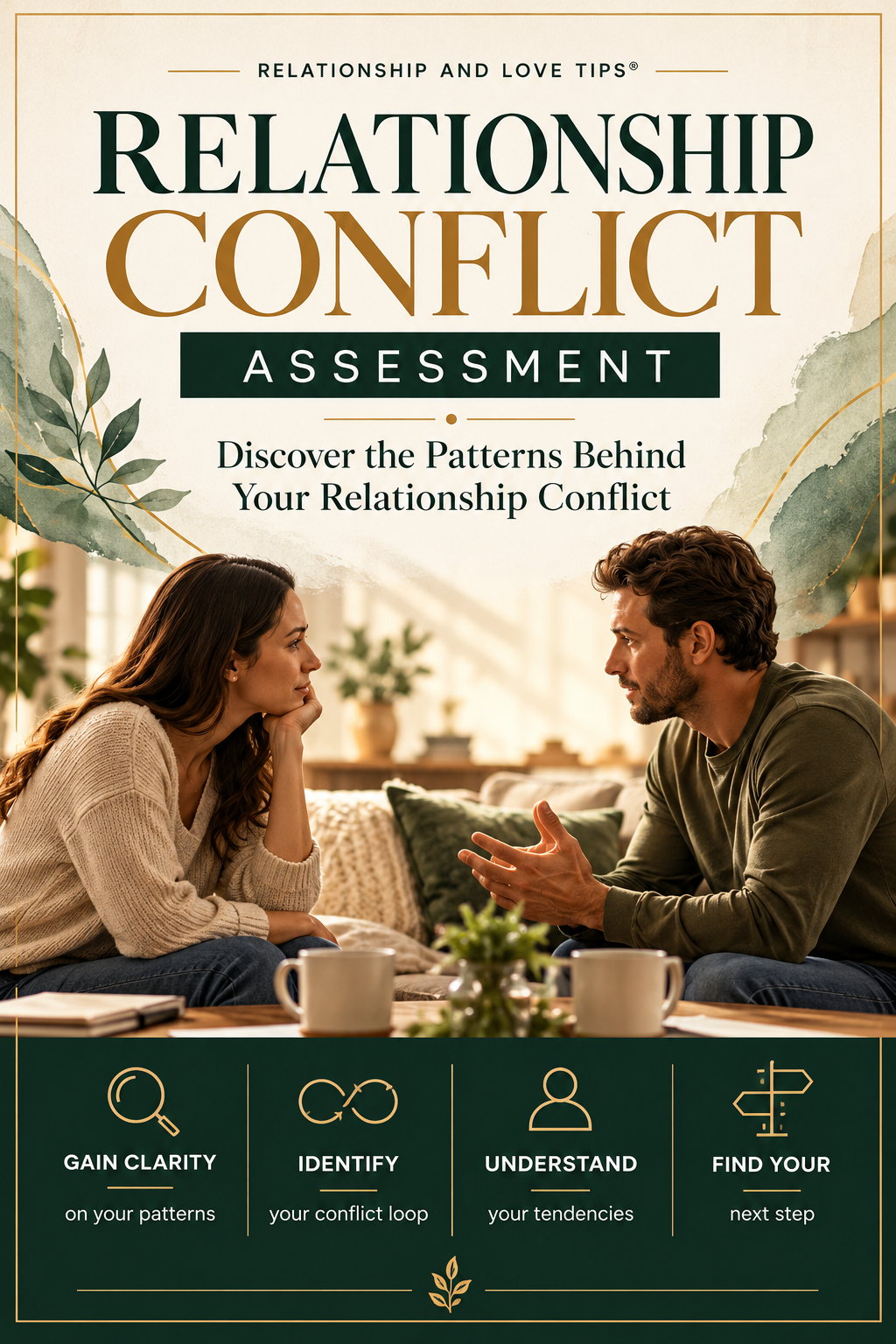
Relationship Conflict Assessment
This short self-reflection assessment helps you look beyond the topic of the argument and notice what tends to happen once conflict begins—including how your own response may become part of the cycle.
Look for recurring sequences that can appear across different disagreements.
Consider what you tend to do when tension, pressure, or misunderstanding rises.
Become more aware of where an ordinary disagreement may begin intensifying.
Identify something within your own response that you can begin observing more intentionally.
Private by design
You can begin by looking at your own experience. Your partner does not have to participate for you to start recognizing what happens in your part of a recurring conflict pattern.
Reflect without sharing the details of your relationship with a group or other participants.
Move through the questions thoughtfully and at a pace that works for you.
Your partner does not have to participate for you to begin observing your own responses.
Look beyond the argument topic and consider what tends to happen when pressure rises.
Private • Online • Self-Paced • Begin Individually
Start here
Answer based on what tends to happen during recurring conflict—not what you think should happen.
Educational self-reflection assessment. Break the Fight Cycle™ is relationship education and is not a clinical diagnosis, mental health evaluation, therapy, counseling, medical care, legal advice, emergency service, or crisis care.